Beautiful floors.
Made responsibly.
We believe the two things are inseparable. Flooring made from real European oak, sourced from independently audited forests, built to last a generation — and honest about the choices we're still working on.
Our commitment
Sustainability isn't a marketing exercise.
For most flooring brands, sustainability means ticking boxes. A certificate here, a claim about recycled packaging there. We find that approach unconvincing — and we think you probably do too.
Our approach starts with the material itself. European oak from responsibly managed forests. An engineered construction that extracts more floor from each tree. A hardwax oil finish that can be repaired and refreshed for decades. And a floor that — if it’s maintained properly — will outlast most things in your home.
None of that is a shortcut. It’s the result of choosing the right materials, the right construction, and the right finish from the beginning.
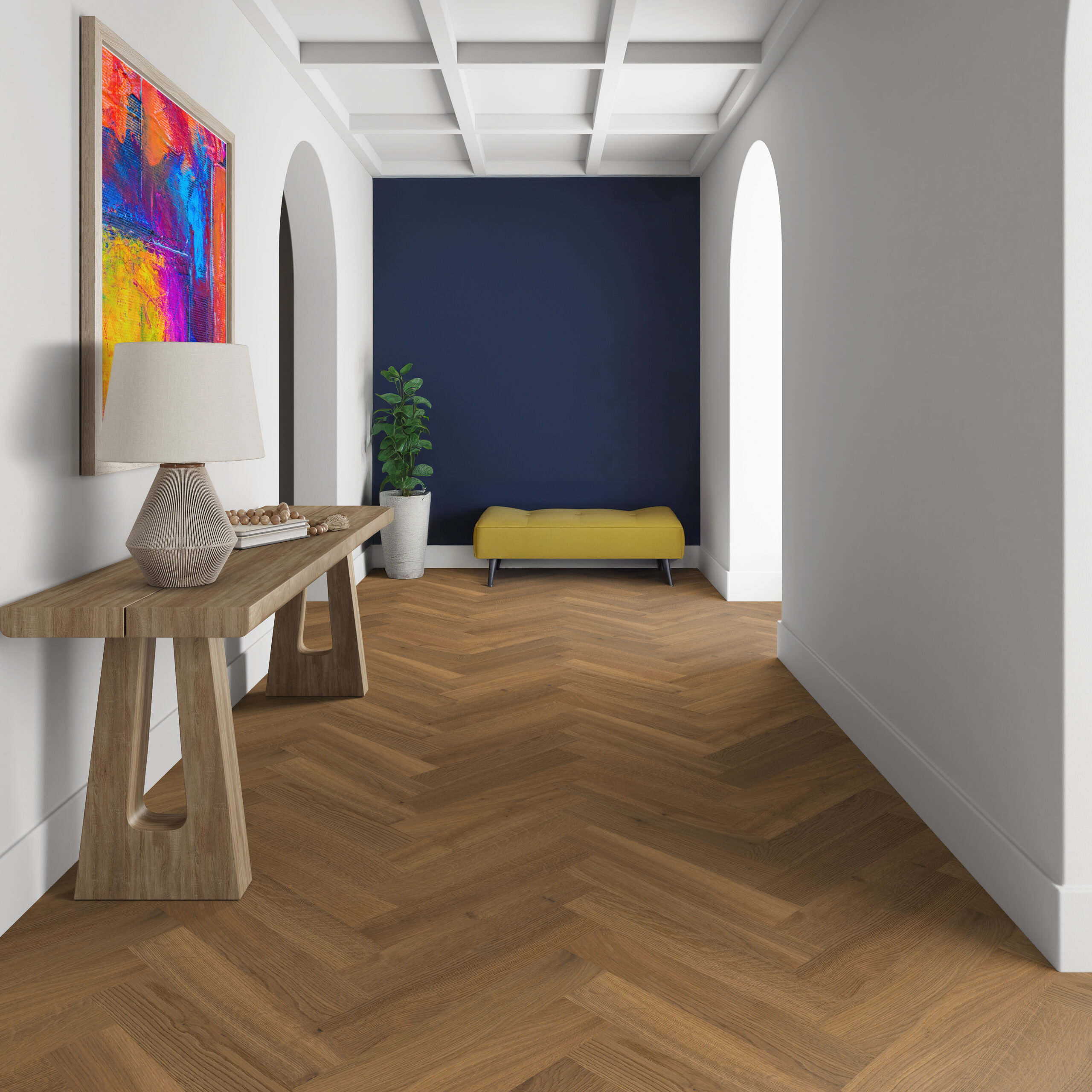
From forests that are managed to still be forests in a hundred years.
All Sanders & Fink engineered oak comes from temperate forests in France, Germany, and Austria — some of the most carefully managed woodlands in the world. These forests are subject to strict national and regional legislation that governs what can be harvested, at what rate, and how regeneration is ensured. They are independently audited, not simply self-declared sustainable.
We work only with sawmills that hold chain of custody certification — meaning the wood’s journey from forest to finished board is documented and verifiable at every stage. Not every brand can say that. We can trace each board back to its source forest region.
We don’t use the term “FSC certified” loosely, because certification schemes vary in rigour and scope. What we can say with confidence is that our timber is responsibly sourced from forests operating under chain of custody controls, with independent oversight. That’s the standard we require, and we don’t drop it.
Engineered oak gets more floors from each tree. That's not marketing — it's geometry.
A 3–4mm real oak wear layer over a birch plywood core means a single tree yields far more floor area than solid oak planks. The oak goes further, the core uses fast-grown timber, and the result is structurally superior to solid wood in most domestic environments.
Engineered construction
More floor from every tree.
There’s a persistent misconception that engineered flooring is somehow less “real” than solid oak. The opposite is true when it comes to environmental impact. A solid oak plank, say 18mm thick, uses 18mm of precious slow-grown hardwood all the way through. An engineered plank of the same thickness uses a 3–4mm layer of real oak — the wear surface you’ll actually see and touch — bonded over a cross-laminated birch plywood core.
This means a single oak tree, properly milled, can produce significantly more engineered floor than solid floor. The hardwood goes exactly where it’s needed: at the surface. The core is made from fast-growing plantation birch, efficiently used and dimensionally stable.
“We’re not pretending engineered is equivalent to solid oak everywhere — it isn’t. But for sustainability, the case for engineered is genuine, not greenwashing.”
Engineered construction also means the floor can be installed in more places — over underfloor heating, in rooms with variable humidity — without the movement problems that plague solid oak. A floor that can be installed properly is a floor that won’t need replacing prematurely.
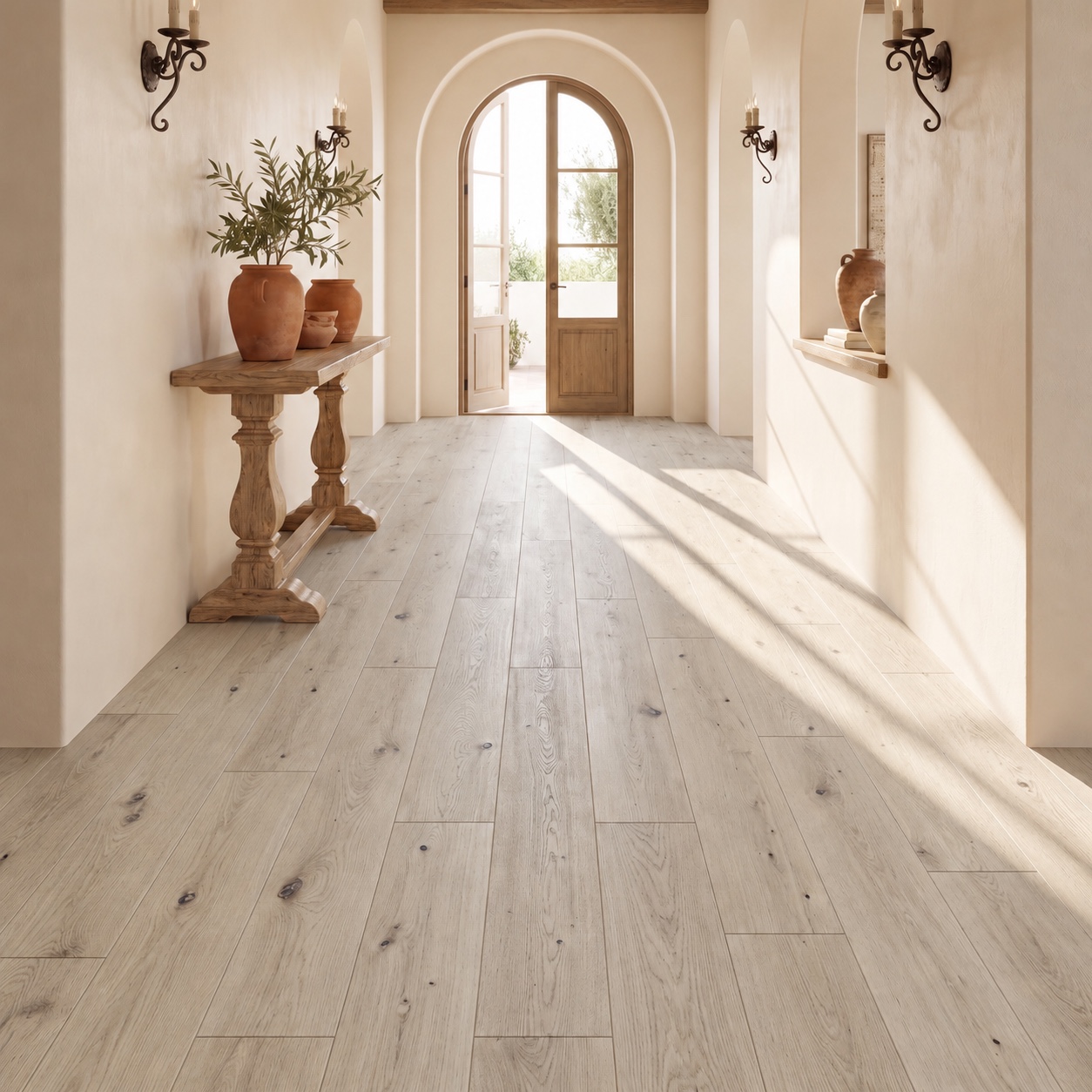
Longevity as sustainability
The most sustainable floor is the one you never have to replace.
This is the argument we believe in most strongly, and it doesn’t get made often enough. The flooring industry has an obvious incentive to sell you replacement floors. We don’t think that’s the right model.
A Sanders & Fink floor, properly laid and maintained, has an expected lifespan of 25 to 30 years — and in practice, an oil-finished floor that’s looked after and periodically re-oiled can last considerably longer than that. The floor your grandparents had, maintained properly, can be the floor your children grow up on.
Compare that to a budget floor replaced every eight to ten years. Even if that cheaper floor is made with ostensibly greener materials, the manufacturing energy, the packaging waste, and the landfill from three replacement floors over thirty years comfortably outweighs the impact of one premium floor made once and kept.
This is the sustainability case we make, and we stand behind it.
Finish & refinishing
A floor that can be renewed, not replaced.
The finish on a floor is not cosmetic. It determines how long the floor looks good, how it responds to damage, and — critically — whether it can be repaired in place or needs to come out entirely.
Our hardwax oil-finished floors are designed for renewal. The oil penetrates the oak rather than sitting on its surface as a sealed film. This means individual boards, or even sections of boards, can be spot-treated and re-oiled without requiring the whole floor to be refinished. A scratch, a dull patch, a mark from a heavy piece of furniture: these can all be addressed at room level, or even at plank level, using the appropriate Sanders & Fink care product.
With proper annual maintenance — a light re-application of hardwax oil — these floors don’t degrade in the way a lacquered floor eventually will. They patinate. They age into the room rather than wearing out of it.
- Oil-finished floors can be spot-repaired — no full resanding required
- Annual re-oiling restores appearance and extends life indefinitely
- Lacquer-finished boards offer robust sealed protection with minimal upkeep
- Proper care guidance included with every order through your retailer
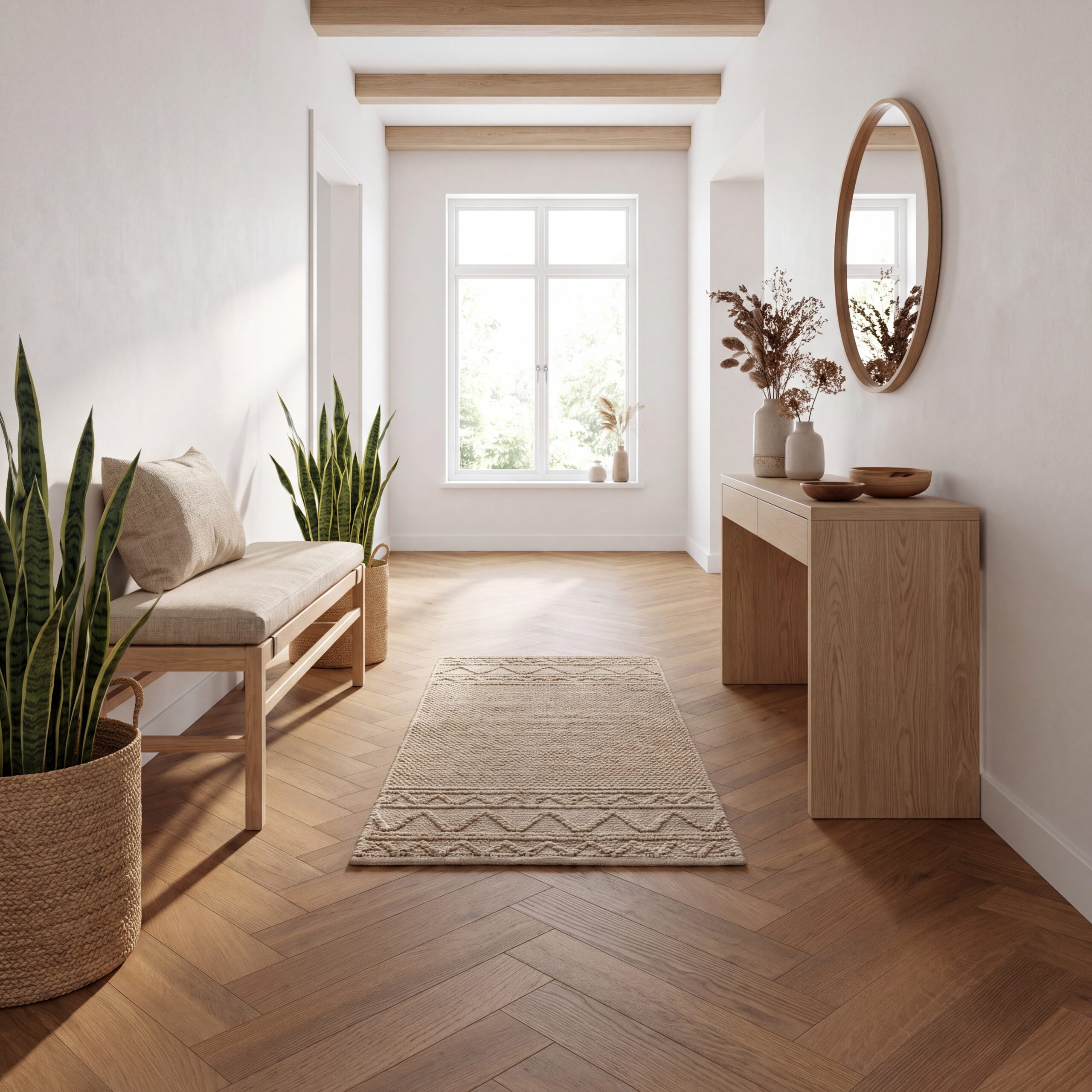
Recycled cardboard packaging
Every Sanders & Fink board is packed in recycled cardboard. We're actively moving away from single-use plastic anywhere in our pack format. This is ongoing work — we won't claim it's complete — but the direction of travel is clear, and we're committed to eliminating unnecessary plastic from our packaging entirely.
UK-based distribution
Sanders & Fink is distributed throughout the UK from a UK-based distribution centre. This means the final leg of delivery — from warehouse to your retailer, and ultimately to your home — is a domestic journey, not a long-haul international one. While the boards do travel from European mills (we're transparent about that), we've minimised the last-mile footprint by keeping UK distribution in the UK.
Our sustainability pillars
The choices that shape every floor we make.
Responsible sourcing
European oak from independently audited, responsibly managed forests in France, Germany, and Austria. Chain of custody certified from forest to finished board.
Traceability
Every board can be traced to its source forest region. We work only with certified sawmills operating documented, verifiable supply chains.
Engineered efficiency
A 3–4mm oak wear layer over birch plywood uses far less precious hardwood than solid boards. More floor per tree. Structurally superior for most domestic applications.
Built to last
A 25–30 year floor maintained properly causes a fraction of the environmental impact of three budget floors replaced over the same period. Longevity is our most powerful sustainability claim.
Honest about our limits
What we don't claim.
We think greenwashing does more damage to genuine sustainability efforts than doing nothing. Here’s what we’re transparent about.
Our boards are milled in Europe and transported to the UK. There is a carbon footprint associated with that journey. We're not going to pretend otherwise or hide it behind an offset scheme we can't fully account for. We've minimised the last-mile footprint by keeping UK distribution domestic, and we're making better choices where we can — but we're not carbon neutral, and we won't claim to be until we genuinely are.
The birch plywood used in our engineered core comes from plantation sources, not ancient woodland. The adhesives that bond the layers together are industrial products. These are real-world constraints of making a real wood floor to a standard that performs properly. We make better choices within those constraints — and we keep pushing on the ones we can improve.
Pro Loc, our luxury vinyl collection, is a synthetic product. It performs exceptionally in high-moisture environments where real wood isn't appropriate, and it's built to last. But we won't describe it as a natural or eco product — it isn't. It's the right floor for the right room. That's how we talk about it.
Chain of custody certification is meaningful and we require it of our supply chain. But no scheme is perfect, and no certificate substitutes for ongoing scrutiny of the suppliers we work with. We'd rather tell you what our sourcing actually means in practice than defer to a logo on the packaging.
Floors made to last.Find yours.
Every Sanders & Fink collection starts with responsibly sourced European oak and ends with a floor built to outlast trends, renovations, and changing tastes.